This news item expired on Saturday, March 31, 2007 so the information below could be outdated or incorrect.
Gardeners planning to order small fruit plants for their gardens find that catalog listings for currants and gooseberries indicate the plants can not be shipped to several states, including North Carolina. The reason for this is that these plants serve as “alternate hosts” for a disease called white pine blister rust, which can kill white pine trees. North Carolina regulation NCAC48A.0401 states in part: “No person shall knowingly and willfully keep upon his premises any currant or gooseberry plant, or permit such plants to mature seed or otherwise multiply on his land.”
Here is the current statement from the North Carolina Department of Agriculture & Consumer Services – Plant Industry Division – Plant Protection Section:
White Pine Blister Rust
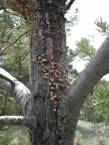 Currant and gooseberry plants (the genus Ribes) cannot be legally imported into, or grown in, North Carolina because they serve as alternate hosts to the plant disease know as white pine blister rust. This is an old regulation established when young white pine plantations were threatened by this disease because of infected, wild currants growing in close proximity to them. There still is an active eradication program in the western area of North Carolina to eliminate wild currant hosts within a certain distance of white pine plantations. It is provided as a service by the N.C. Forest Service.
Popular magazines and plant catalogs claim that the cultivated varieties of currants and gooseberries are resistant to the disease and do not pose a threat to white pine. These claims have yet to be backed by scientific evidence. Researchers in other states are currently testing various varieties for resistance. Their findings will impact what North Carolina does in regard to amending this regulation. Another option is to designate only certain areas of the state as regulated areas and limit movement of currants and gooseberries into these areas only. Currently, the entire state is regulated.
For more information, call Buncombe County Cooperative Extension at 255-5522.